A Creative Afterlife: Experiencing Dorich House in the mid-1990s
In 2019–20, a group of volunteers were trained in conducting oral histories for the ‘Squatter Years’ project. Here volunteer and MA Museum and Gallery Studies student Rebecca Rushton reflects on her experience of interviewing four people for the project.
When I first walked through the doors of Dorich House Museum in November 2019 to train as an oral historian, I didn’t realise how closely I would become involved in a live research project. The opportunity to be trained as an oral historian by Rib Davis, a qualified trainer from the Oral History Society, was offered to me when I was studying for an MA in Museum and Gallery Studies at Kingston University. On completion of the training, I was able to conduct oral history interviews and transcribe and create audio clips from them. The topic of the Squatter Years research project unfolded as I learnt that Dorich House was occupied by squatters and that raves took place there in the 1990s after the death of the owner, an artist called Dora Gordine. In order to record and collate the history surrounding these occupations, stories from its hidden past needed to be uncovered.
The opportunity to carry out oral history recordings arose midway through my first term and I volunteered. What an amazing experience. A fantastical and mysterious world was unlocked for me. The sheer excitement and joy expressed by the interviewees when they recalled their surreal experiences of visiting the squat or going to parties at Dorich House in the ’90s highlighted to me the importance of recording such histories. Talking with the BBC in 1972, Gordine mentioned the importance of capturing the soul of the sitter when sculpting them, commenting: ‘the feeling, the nostalgia and the dream – all that you have to put into your sculpture’. These oral histories have likewise encompassed these facets for me, leaving a legacy of feeling, nostalgia and dream.
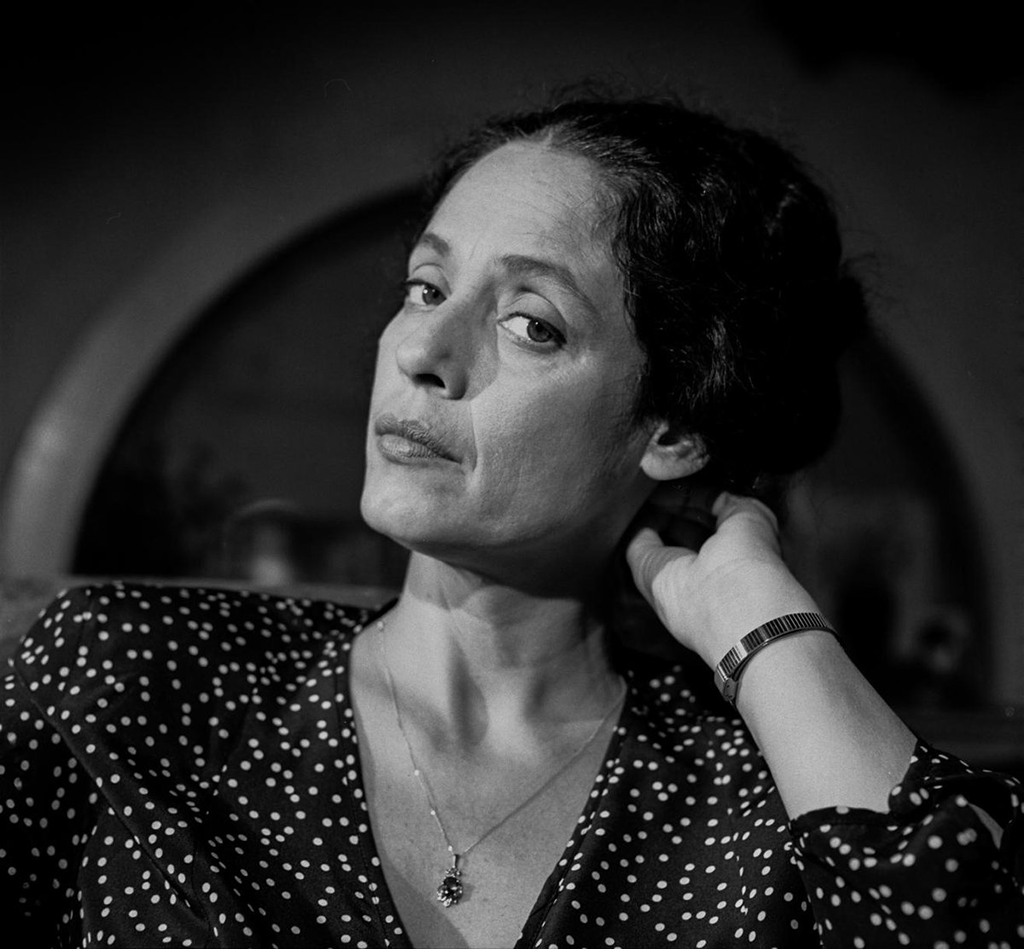
I interviewed four people for the project: Omar Karmi, a journalist who was a student during the 1990s and regularly visited a friend who was squatting Dorich House; Luke Moreton, a carpenter who also went with Omar to visit their friend at the squat; Danielle Jørgensen, an architect and a friend of Omar’s who went to a party at the squat; and Linda Richards, a former Kingston Tour Guide who didn’t visit Dorich House during the ’90s but was heavily involved in the music scene in Kingston from the 1970s onwards.
The first recordings with Omar and Luke took place at Dorich House in March 2020 the weekend before the first national lockdown. We were all a little nervous due to the current situation and this was highlighted by the distinct lack of handshakes and normal greetings. The would-be nerves surrounding the interviews were masked by the uncertainty of the new virus, and perhaps as a result the recordings all went smoothly. The next recording that I was involved in with Danielle took place remotely during the lockdown and was an extremely nerve-racking experience for me due to my complete lack of knowledge surrounding technology, but with project coordinator Helena Bonett’s calm instructions and advice the recording went well. As I moved onto the fourth recording with Linda, my nerves were less stretched and apart from a little feedback issue this interview and recording also went well.
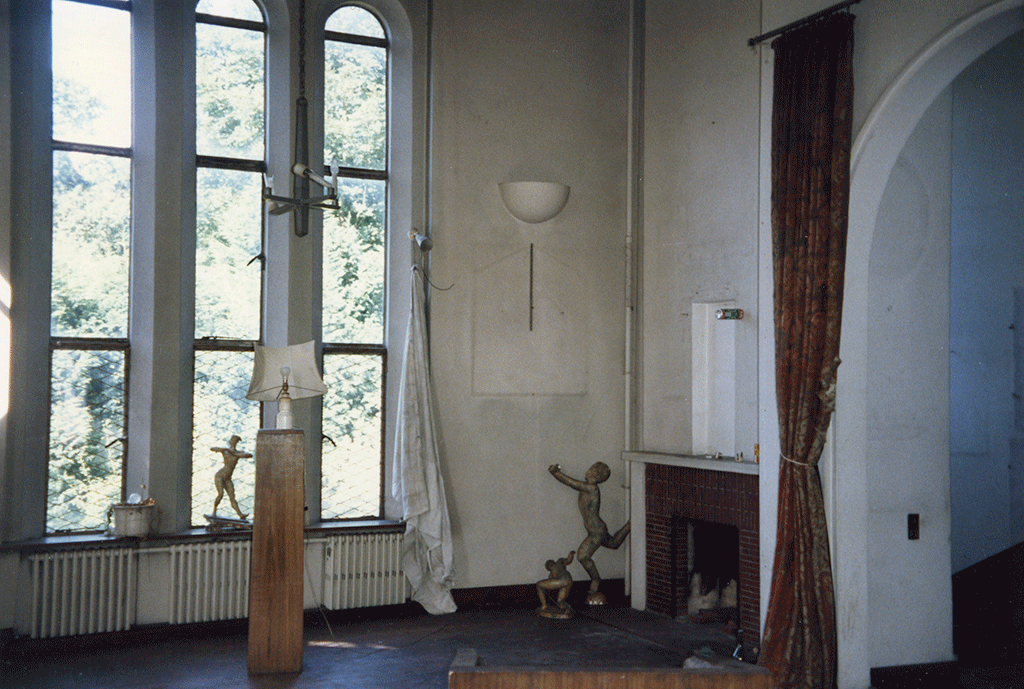
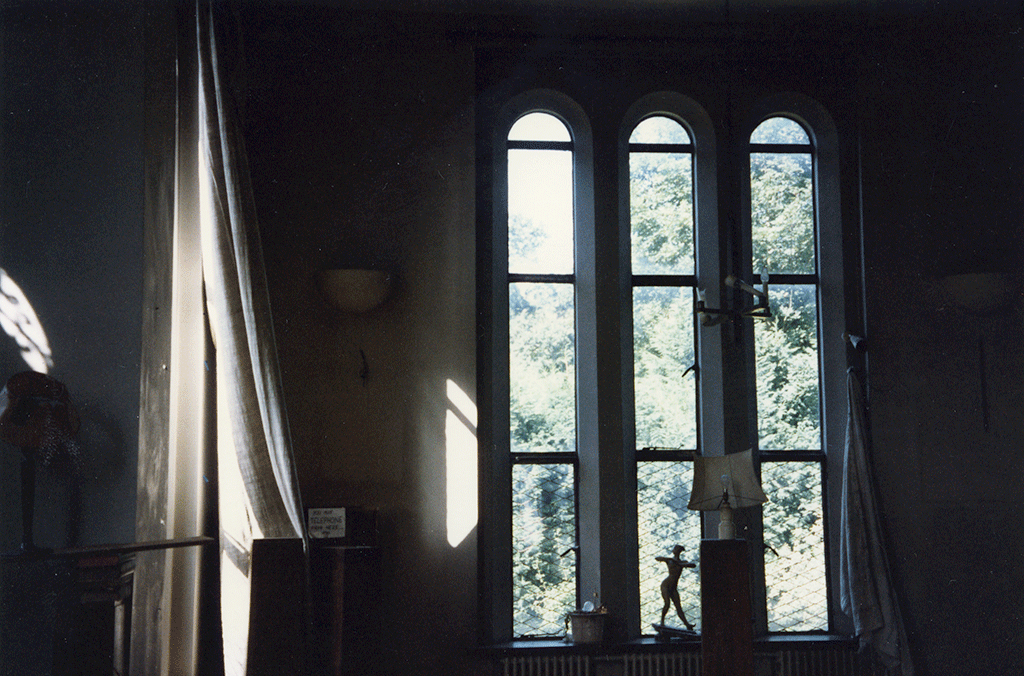
The oral histories revealed the space in and around Dorich House as having been derelict, run down and in a state of general decline. But it was clear that this space slowly, and secretly, became filled with an underground carousel of visitors: Dorich House’s spirit was kept truly alive. Extracts from the interviews can be heard below, and these recordings illustrate the ability of oral histories to translate memories into the spoken word which, in this instance, have unlocked aspects of Dorich House’s hidden past.
Omar and Danielle each described their first encounter with Dorich House.
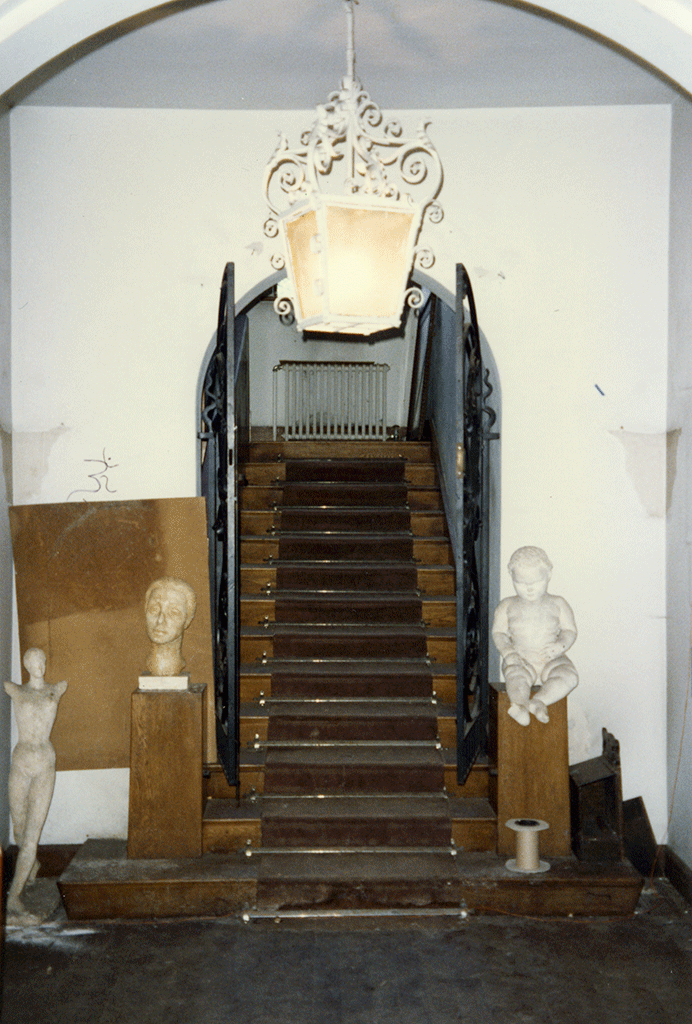
‘The structure itself was, was gorgeous and, you know, there was something, there is something quite magical about it, in the sense that it was unique. And it has all these levels to it and at the time I remember, you know, you’d wander around and, and there was still a lot of the, of the artwork – whether it were, you know, the models of the artwork or the artwork itself, still around – so there was this kind of fairy-tale, adventure-land feel to it, you know, you’d go to another room and you wouldn’t really know what to expect and what you would see. And that was also helped by the slightly carnivalesque nature of, of the people who lived here, and the things that were going on. So, yeah, it was, it was a really interesting place. And I have fond, if hazy memories, of it.’
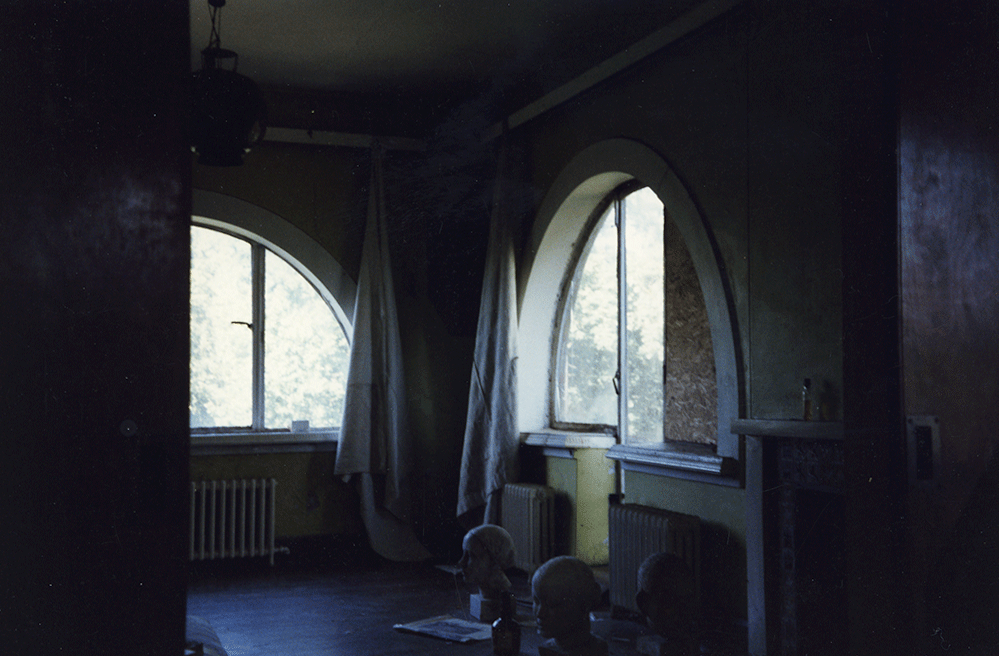
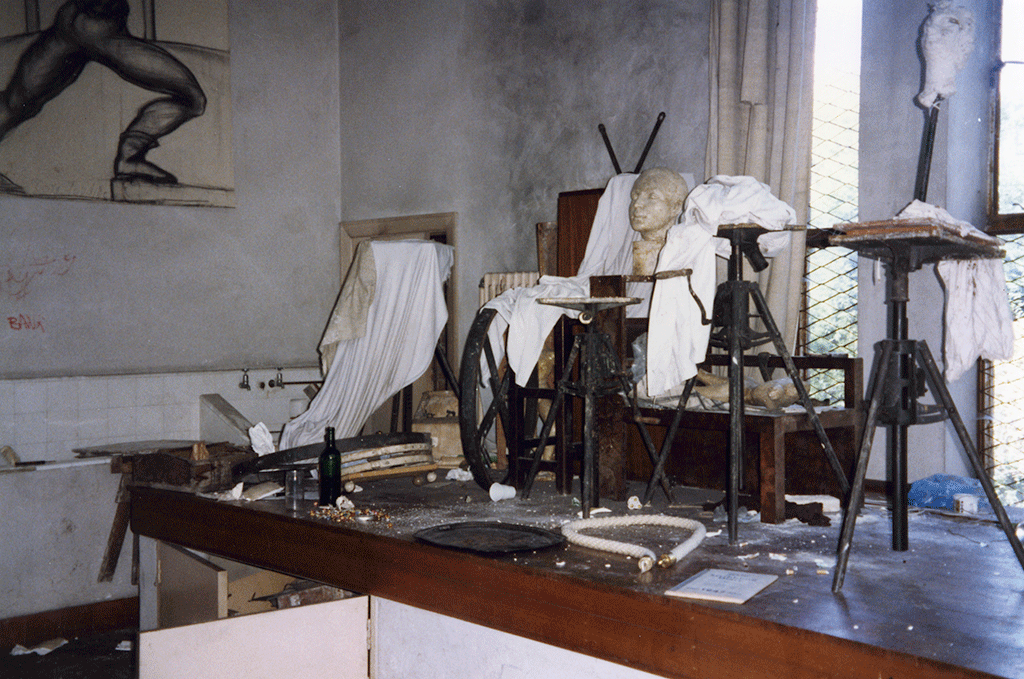
‘Well, I think the house was really sort of, er, er, how do you say that, deteriorating? Um, I’d only heard beforehand that we were gonna go to the squat, and oh, I think Omar had been there, and it, he told me it’s quite an amazing house, it’s really big, and all these people moved into this squat. Er, and so we went there, I think in the afternoon, and it was summer, and I remember, like, this coming up towards the house, that I was amazed that there was such a big house in the south of London – I think I had this idea of South London was looking in a different way – and suddenly there was this, like, really posh house deteriorating. So it was a bit like when you sort of been in, in a movie, you come up to this big house, it was a bit spooky looking. And, um, and like it had also, um, like the garden was like sort of quite grown with er, er, how do you say that? Because no one was looking after it. And, um, what I remember then, when we came there was this, like sort of rave party going on. But I think I was much more curious about this house, I thought it was so amazing – I sort of really like this sort of aesthetics of, of it deteriorating – and so I think I went around the, the house exploring it more than participating in the party. And, and I just remember, especially I remember, the, the, the atelier, which had these big glass windows, and these rose bushes had sort of grown into the atelier, and it was really beautiful. And then you had all these busts, like the sculptures, they were like, sort of just scattered all over, and most of them had broken.’
For Omar, the house had a magical and carnivalesque feel. For Danielle, there was a spooky yet amazing atmosphere. The deterioration of the house and garden intrigued them. For Danielle, Gordine’s abandoned studio stood out, with statues and plaster casts scattered around. Omar felt that the squat was a creative, artistic place where some ‘lost souls’ could find each other.
‘And there wasn’t really the opportunities – they were cutting down on people going on the dole, although it was still possible, just about; they were cutting down on squats, they were, they were eliminating the whole squatting culture – so for people who had been part of that or wanted to be a part of that it was really tough, actually. So, you know, people gather together and find each other. And, and that was very much what this was. I remember people juggling fire, you know, sculpting in the middle of the night, with, with dancing and music going on and, and there was this kind of mad, you know, slightly crazy over the top artistic hedonistic thing going on, which was just very attractive. And, I mean, I don’t know if anything really serious work would have happened here, but it was certainly, um, creative, and it was fun. And it was filled with, you know, free spirits and lost souls, that kind of thing.’
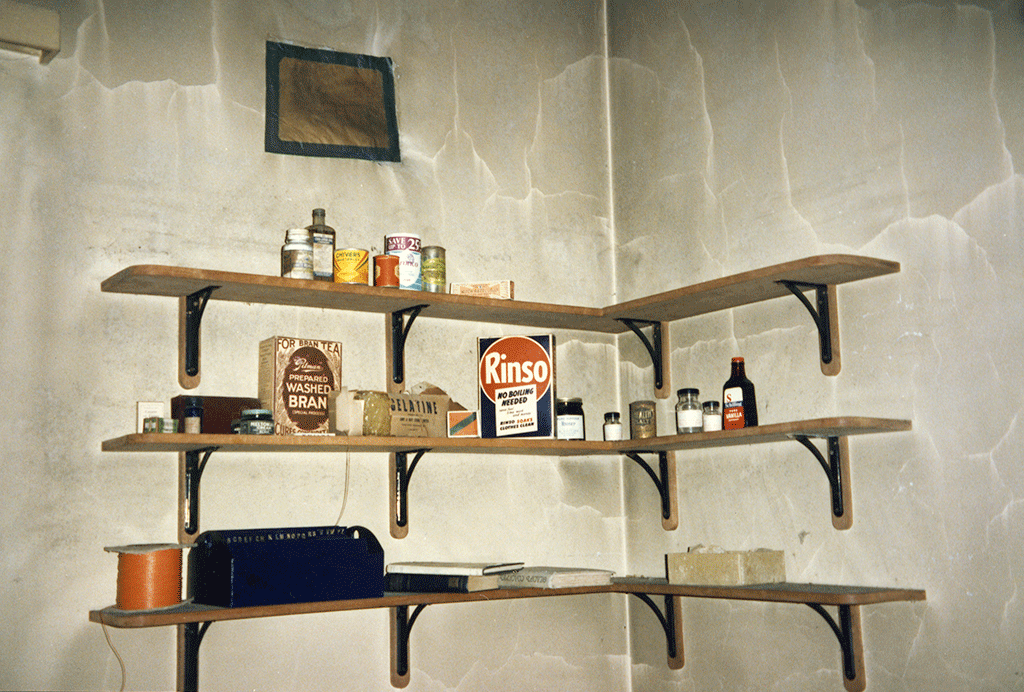
In Danielle’s explorations of the house, she found old packets of washing powder from the ’70s and a man living in the garden in the Bedouin style.
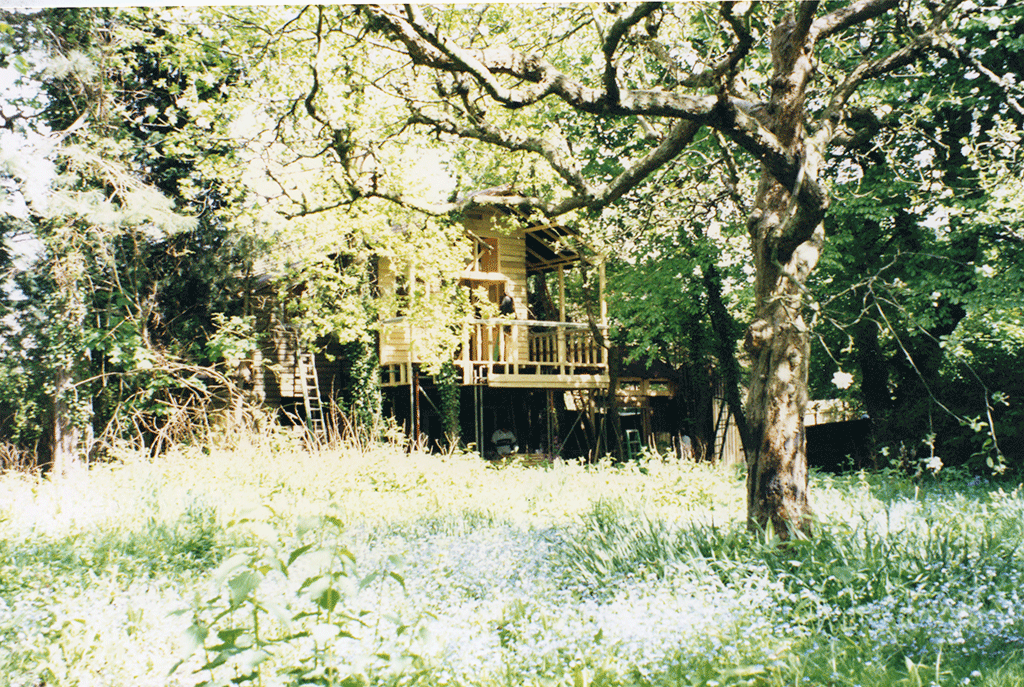
‘And then I just, I was just like, I just went round the house, and I found all this old stuff – like old boxes with washing powder, and, from the ’70s – and, and it just seemed like, you know, no one had really lived there for a very long time. And I remember going into the garden and there was this one guy and he was like, he had sort of made some kind of homemade tent out there, er, under a tree, and like, I remember talking to him – because I couldn’t understand why he didn’t want to live inside the house, because it was so amazing – so he thought that was, you know, I can’t remember his explanation properly, but, but he was like, he thought that was, you know, he just wanted to live outside in the tent he made himself, which was like more like a sort of Bedouin tent.’
In recording these oral histories, it became clear to me that people’s memories and experiences differed. Was it acoustic folk music, circus sounds or the electronic sounds of the acid house rave scene that echoed around the walls and gardens of Dorich House? It could have been all of these.
Luke: I recall, probably, elements of, you know, this kind of luminous orange and yellow – like, the ravey paint that lights up in UV. I’m sure there would have been a bit of bed linen or something hanging up that had been probably used for a backdrop or something. You know, so I’m sure they would have been an element of that.
Omar: Drapes were a big thing back then.
Luke: Yeah, yeah.
Omar: So there would have been tie-dye drapes, I imagine.
Luke: Yeah. It was the time of, sort of, rave culture was just sort of coming in as well, wasn’t it?
Omar: Oh no, it was coming out, I think, wasn’t it? I mean, ’91? Sort of the end of, the tail end of it a little bit?
Luke: That’s when I started going, I think.
Omar: Well, yes, I mean, we weren’t really old enough for the whole thing. For the first part of it. But yeah, so that was there. The festival culture, the musicians…
Luke: But there was kind of Mutoid Waste [Company] and all of that lot as well.
Omar: Mutoid Waste, I was trying to remember Mutoid Waste. There was, there was that sense to it.’
Whilst this part of Kingston’s history played out at Dorich House, Linda Richards recalled how Kingston has been an important, creative and influential hub as long as she can remember. Her early adventures of going to squat parties in the ’70s in and around the Kingston area were a different kind of experience.
Linda refers to other episodes of Kingston’s rich musical history, including a visit to Kingston University’s music studios, now the Tony Visconti Studio, with her son and the Kingston Green Fair at Canbury Gardens, which began in 1987.
‘… worked on the original studios for Kingston University, the ones that are opposite Dorich House. And so, when my son was about two, we went to the opening of these studios. And I remember it so well because he was very good because I had taken him always to music – he was a very, very sweet child when anything was musically happening – and I had him dressed in a little white fur coat (not a real fur coat but a fun fur coat) and he was just like, he loved it, and everybody loved him, which was really nice. And recently I’ve been back to that studio because now it’s the Tony Visconti studio. I went when Tony Visconti was doing, he was, he was talking and playing some Bowie stuff. So, so that was a really nice thing to do. And also during this time, which was very interesting was, Kingston always had a fair called the Green Fair – it was down by Canbury Gardens, down by the river – and people would come from miles, and a lot of people would come in boats, and it was a place that travellers would come to. And they, they had this thing, the Green Fair, that they wouldn’t sell anything that was from an animal – so no food, not anything animal product-wise – and it was to enlighten people environmentally. So everything ran either by bicycle or light. And there was… there were people that came and told stories and puppet boats and puppet puppeteers, and lots and lots and lots of music. And so people would sit around Canbury Gardens, just, it was just really, a really nice event.’
It is possible that some of the people mentioned by Linda visited Dorich House and added to the fairy-tale and circus-like atmosphere discussed by Omar. Linda’s playlist of bands she saw in Kingston over the 1970s to 1990s can be listened to on Spotify here.
For me, an intriguing aspect of recording these oral histories was the ability of the interviewee to take me on a journey into their memories and to then feel immersed in the memories of events themselves. Another interesting observation was that the memories of events often differed. But the obvious and overriding emotions from the interviews were of happiness and joy at recalling memories and the opportunity for people to recount their histories. For myself, being able to take part in the oral-history programme for the Squatter Years project has been a wonderful experience of exploration and discovery.
Published as part of the project The Squatter Years: Recovering Dorich House Museum’s Recent Past, funded by the National Lottery Heritage Fund, February 2021.